


Managing, Tracking, Forecasting Cash Flow for Improved Profit and Performance
The Secret to Your Company’s Success? Cash Flow
When our founder and CEO Scott Peper first started Mobilization Funding, he had a lot of conversations with construction and manufacturing business owners. What was the thing that kept them awake at night? What was holding their team or their company back from achieving its true potential? Why were many of these businesses growing, but still living from one pay app to the next? The answer was two words: Cash flow.
They needed a way to see it, understand it, track it, estimate it, manage it. Once they could see their own financial data, in a format that aligned with the way their company spent and made money, they were able to make proactive decisions that saved stress and improved success.
What is Cash Flow?
Cash flow is the lifeblood of every business. It refers to the movement of money into and out of a company. When cash inflows from clients, projects, or investments exceed outflows like payroll, supplies, and overhead, the business experiences positive cash flow. This provides stability, flexibility, and opportunities for growth.
Conversely, negative cash flow—when expenses outpace revenue—can be crippling even for companies that appear profitable on paper. Profit and cash flow aren’t the same: a business can show profit but still fail due to late payments or high upfront expenses.
Effective cash flow management allows leaders to invest in new opportunities, weather downturns, and reinvest in their teams. Free cash flow—the money left after all expenses are covered—is especially important because it shows what’s truly available for growth or emergencies. For project-driven industries like construction, understanding both organizational and project-level cash flow is essential.
Businesses that master cash flow can operate with clarity, reduce stress, and make proactive decisions, while those that don’t often find themselves struggling despite hard work and strong sales.
82% of small businesses fail because of poor cash flow management.
Source: U.S. Bank Study
Cash Flow Starts at the Project
Cash flow success starts at the project level. It’s tempting to equate a signed contract with guaranteed cash, but revenue isn’t real until payment clears the bank. For industries like construction and manufacturing, projects require upfront spending on labor, materials, and overhead long before invoices are paid. That gap creates strain unless planned for. By creating a project cash flow statement, businesses can forecast when expenses hit and when revenue will arrive. This approach helps identify gaps, determine financing needs, and prevent one project’s cash from subsidizing another.
For example, if a contractor knows they’ll face $400,000 in costs before seeing $150,000 in revenue, they can plan ahead with financing instead of scrambling mid-project. Rolling project cash flow statements up to the organizational level gives leaders a clear view of which jobs strengthen the business and which drain resources. This visibility ensures that projects not only generate profit but also support the company’s overall financial health. Starting from the bottom up empowers business owners to see where money really flows and to lead with confidence.
Try Mobilization Funding’s Project Cash Flow Tracker

At Mobilization Funding, we believe tools turn knowledge into action. That’s why we created the Project Cash Flow Tracker—a free resource for contractors and manufacturers.
This digital tool makes it simple to map out income and expenses week by week, showing exactly when cash will arrive and when it will be needed. Instead of relying on guesswork or bank balances, users can see gaps before they occur and make proactive decisions.
Need to know if payroll will be covered during a delay? Or whether ordering materials early will create strain? The tracker provides clarity. Hundreds of business owners have already used it to transform the way they approach projects, leading to faster schedules, stronger margins, and less stress. By visualizing cash movement in real time, leaders gain the power to negotiate better terms, secure financing only when necessary, and confidently pursue new opportunities.
Try it today and experience how visibility into your cash flow can change the trajectory of your business.
Managing Cash Flow
Managing cash is about more than checking your bank balance—it’s about understanding where money comes from, where it goes, and when those movements occur.
Small and mid-sized businesses are especially vulnerable to financial shocks because they have less free cash to cover delays or unexpected costs. Effective management begins with upgrading accounting practices, ideally with the help of a qualified CPA.
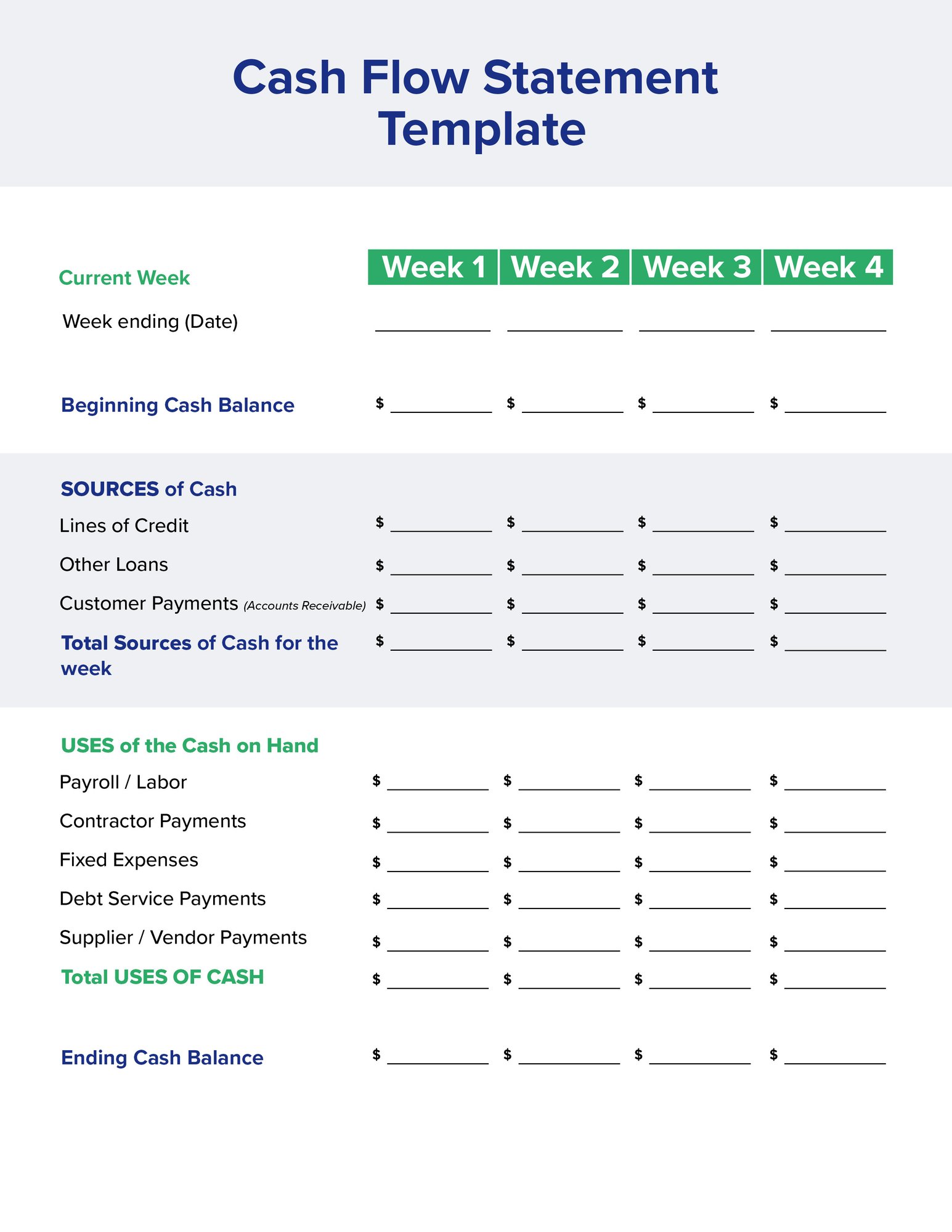
Accurate numbers allow leaders to create cash flow statements, which track sources of income (like project payments, loans, or investments) and uses of cash (like payroll, materials, and overhead). These statements reveal whether revenue covers expenses and highlight when funding gaps may occur.
The good news is that programs like Quickbooks make this easy, with built-in templates for ledgers and other financial reporting. If you’re a smaller businesses and have not yet hired a CPA, a Quickbooks or other accounting software is a good place to start.
Good management also prevents the dangerous habit of “borrowing from Peter to pay Paul”—using one project’s revenue to float another. Instead, owners can plan financing responsibly, negotiate better terms, and build emergency funds. Ultimately, cash flow management reduces stress, builds trust with vendors and lenders, and positions businesses to grow sustainably.
If you are not using QuickBooks or a CPA (and we strongly urge you to do so!) then you can still create a cash flow statement. In order to create the cash flow statement, you need to know from where money comes into your business, where it goes and — critical to understanding cash flow — when the money flows in and out.
Creating Your Cash Flow Statement
- List all major sources of cash. This can be company revenue, investments, finance, etc.
- List out all the uses of your company’s cash. Payroll, materials, insurance, rent, utilities, marketing. Consider the amount of these uses, but also their timing and frequency.
- Enter your cash Sources and Uses in the Cash Flow Statement template. You can do this as a monthly snapshot of your company’s cash flow. (See our example below)
Analyze your Cash Flow Statement. What do you see? A good cash flow statement should reveal any gaps in your company’s cash flow — places where your uses (money out) exceeds your sources (money coming in). Seeing these potential challenges in advance gives you greater opportunity to solve for them.
A Quick Word About Bank Statements
Many business owners evaluate their company’s financial health based on their bank statements. Stop that. Your bank statement is not an accurate depiction of your company’s financial health. It is just one small piece. Think of it like this—in the same way that a beating heart doesn’t equal a healthy body, a lot of cash in your bank account doesn’t necessarily mean your business is financially healthy.
Estimating
Estimating the flow of cash allows businesses to look ahead, anticipate needs, and prepare for growth. The process begins by determining a starting point—what’s in the bank and what’s expected from ongoing operations. Next, incoming revenue and outgoing expenses are projected based on historical data, seasonality, and planned changes such as hiring or new projects. A 13-week rolling forecast is particularly effective, as it provides a near-term view while being flexible enough to update weekly.
Estimating also applies at the project level. By mapping out expected invoices and vendor payments, contractors can see exactly when a job will require cash and when it will generate positive flow. This insight helps identify shortfalls early and secure financing or adjust operations before issues arise. While no estimate is perfect, consistent updates ensure accuracy over time. With proactive estimating, business owners replace uncertainty with clarity, reducing financial surprises and building confidence in their decisions.
Want more cash flow education?
Cash flow is the #1 killer of small businesses. But it doesn’t have to be.
Inside The Big Book of Cash Flow, you’ll find simple tools to estimate and track your cash flow, spot problems before they hit, and finally stop worrying about what’s coming next.
Tracking
Tracking the flow of cash transforms planning into reality. While estimates provide a forecast, tracking ensures businesses know what is actually happening. For projects, this means recording weekly expenses, payments, and timing to see whether actual cash movement aligns with projections.
Tracking allows owners to answer critical questions:
- Can I afford another crew?
- Will this change order affect payroll?
- Do I need to renegotiate supplier terms?
At the organizational level, tracking helps leaders identify trends, like overspending on overhead or recurring payment delays. It also prevents reliance on one project’s revenue to float another, reducing risk. Tools like our Project Cash Flow Calculator simplify this process, turning complex financial data into actionable insights. Tracking not only supports financial stability but also improves sleep—owners gain peace of mind knowing they can cover payroll, pay vendors on time, and keep operations running smoothly. In short, tracking cash is the foundation of sustainable business health.
Forecasting
Forecasting cash flow builds on estimating and tracking by predicting the future financial health of a business. Forecasts typically cover 12 months, broken into monthly projections, with each completed month compared to actuals. This rolling process highlights discrepancies and keeps leaders grounded in reality. More granular weekly forecasts—such as a 13-week model—are especially useful in industries like construction where timing is critical.
Forecasting requires considering revenue, expenses, overhead, and debt service, along with assumptions about market conditions, customer payments, and growth plans. Done correctly, forecasting reveals whether the company can afford new hires, equipment purchases, or expansion into new markets. It also uncovers risks like low margins or seasonal shortfalls before they become crises. Beyond numbers, forecasting empowers decision-making. Leaders can confidently pursue opportunities, knowing they’ve accounted for the financial impact.
With reliable forecasts, businesses move from reactive survival mode to proactive growth mode, setting the stage for long-term success.
Cash Flow and Growth
Growth is great, but growth with cash flow to support it can actually end up killing your business. Sacrificing profitability for growth is like digging a grave when you think you’re building a castle. Eventually, you get buried.
You need a cash flow plan that covers your present needs and your growth goals.
Uncontrolled growth is one of the top reasons contractor businesses fail. In the race to win more bids and execute those contracts, well-intentioned business owners push their company over a cash flow cliff. Growth is critical to long-term success, but if you are bidding too low on projects just to win them and grow the top line, you are doing more harm than help to your company.
Read that last sentence again: If you are bidding to WIN but not to PERFORM and PROFIT, you are doing more harm than good to your company’s future.
Tips for Profit
Profitability depends not just on winning projects but on managing cash wisely. To maximize profit, business owners should focus on markup versus margin, ensuring that bids cover overhead as well as direct costs. A carefully built Schedule of Values can also help, by aligning billing milestones with actual expenses and reducing the risk of funding gaps. Other profit-focused tips include negotiating better payment terms, billing promptly, and keeping a close eye on labor and material costs. Building efficiencies in scheduling—like completing projects faster without sacrificing quality—can also improve margins significantly. Owners should also analyze which projects and customers truly contribute to profitability, rather than chasing every opportunity. By integrating cash flow management into profit strategies, businesses can grow top-line revenue while ensuring the bottom line also expands. In other words, smart cash flow practices turn hard work into real, sustainable profit.
Cash Flow Tips for Performance
Cash flow doesn’t just impact profit—it directly affects performance. When payroll, vendors, and overhead are consistently covered, teams operate with less stress and more focus. Financial visibility allows owners to invest in training, equipment, and process improvements, all of which boost performance. Conversely, when cash is tight, corners may be cut, safety compromised, and morale lowered. Practical tips for performance include aligning internal teams on financial priorities, negotiating favorable supplier terms, and maintaining an emergency fund. Tracking project-level cash ensures crews have the resources they need, when they need them, avoiding costly delays. Leaders should also operate from a mindset of abundance, viewing financing not as a burden but as a tool to enhance performance. By creating financial stability, owners empower their teams to execute with excellence, turning cash flow from a source of stress into a catalyst for high performance.
A message from our founder
Our strategy for finding new clients is simple, and aligned to our core value of “Do the Right Thing.” We strive to help every business we come in contact with, even if they ultimately never use our funding solution.
Our goal is to be an educational resource for our business owner community, providing valuable materials like cash flow models, ebooks, and webinars, and expert information on insurance, bonding, accounting, and anything else that might keep business owners up at night.
Bottom line: We work to be your trusted resource first, and your potential lender second.
That might sound unconventional, but I believe it is the right right thing to do for our community, our clients, and our business—and that has proven itself to be true over and over again.
Scott Peper, CEO & Founder