


[00:00] Scott:
Welcome everybody to the next episode of The Mobilization Mindset. My name is Scott Peper, CEO and founder of Mobilization Funding, and today we are going to be talking about our October Cash Flow event. Drew and I are here to kick through exactly what we’re gonna be talking about, why you might wanna consider coming, who’s gonna be here, our favorite guest host, Ben Holmgren. He’s got a great group. He’s got a great guest. Scott Kiplen’s gonna be here, Suzanne Bach, and also our good friend, Herb Sargent. Jump into this with us. We’re gonna talk about it. You can find out all kinds of information, and even see what the October Cash Flow event looked like last year on our website at mobilizationfunding.com, and our YouTube channel, Mobilization Funding. Drew, let’s get it.
[00:53] Drew:
Dude, we’ve got some pretty experienced folks in the room.
[00:57] Scott:
I know.
[00:57] Drew:
Some legends.
[00:58] Scott:
What’s exciting you the most about what we’re gonna do?
[01:02] Drew:
Um, I, I think personally, I’m most excited about me- I, I’ve met Herb a couple times.
[01:07] Scott:
Mm-hmm.
[01:07] Drew:
I mean, you guys just wrote a book together. Um, he’s been in the office a couple times. He’s got a presence about him. I mean, you just… He walks into a room and you just kinda know he’s seen it.
[01:15] Scott:
Yeah.
[01:15] Drew:
He’s been through it. And I’m excited about really sitting down, listening to him, learning from him, and kind of seeing the attendees in the construction space, what kind of questions they ask him. That’s what I’m really excited about seeing.
[01:27] Scott:
Yeah. So we got a great group, too. Um, of the guests that are already coming, there’s pretty good mix of-
[01:33] Drew:
Mm-hmm
[01:33] Scott:
… the dirt world, but also other contractors.
[01:36] Drew:
Mm-hmm.
[01:36] Scott:
Um, nice mix of size companies, whether it’s people or revenue, depending on what you wanna measure.
[01:42] Drew:
Mm-hmm.
[01:42] Scott:
Um, but the main focus is, how do you drive more profitability in your construction business?
[01:48] Drew:
Mm-hmm.
[01:49] Scott:
What do you think is gonna be the one or two things that people are gonna come out of that with that can really move the needle?
[01:56] Drew:
Yeah. I mean, I think number one is, we see this over and over and over again, and we’ve done a couple of workshops, but w- you know, most of the companies that come in here are profitable, right? They’re, they’re running a profit on paper-
[02:09] Scott:
Mm-hmm
[02:09] Drew:
… but they’re not feeling it. And I’m excited about Scott Kiplen, Herb, really talking through the mechanics of jobs, the mechanics of bidding jobs, the mechanics of the pro- gross profit on jobs, and how important that expected profit versus that actual profit is on those jobs, how it affects the actual cash flow itself. And we all know that profit and cash don’t equal the same thing. But maintaining favorable margins on jobs and how to actually execute that, I mean, that has a, it plays an incredibly important role.
[02:40] Scott:
Yeah. I think people are gonna find out nuances, little tips and tricks of the trade-
[02:46] Drew:
Mm-hmm
[02:46] Scott:
… around managing your labor.
[02:48] Drew:
Mm-hmm.
[02:48] Scott:
Managing your labor when the, when you have a consistent payroll, you have a ton of employees, and then it dips-
[02:54] Drew:
Mm-hmm
[02:55] Scott:
… in production or dips in when construction’s gonna start or dips in project productivity.
[03:01] Drew:
Mm-hmm.
[03:02] Scott:
Managing the efficiency to that. You’re gonna find a lot of tips and tricks in that. I also think the other big thing people are gonna come out of, the other kinda driver to cash on the bottom line is measuring your overhead.
[03:15] Drew:
Mm-hmm.
[03:16] Scott:
Your overhead allocation to each job.
[03:18] Drew:
Mm-hmm.
[03:18] Scott:
Tracking it, paying attention to it, being able to guide to it so that you can actually really deliver on not only the overall profitability of the cost of goods sold, labor and material-
[03:29] Drew:
Mm-hmm
[03:29] Scott:
… and equipment on the job, true job cost, but when you layer in that extra amount of overhead-
[03:34] Drew:
Mm-hmm
[03:34] Scott:
… and you don’t know or how to track that per job or per the schedule and flow, that’s where a lot of things get missed and you just get hurt.
[03:42] Drew:
Yeah. And above and beyond taxes-
[03:45] Scott:
Mm
[03:45] Drew:
… Suzanne Bach really can go into what does cost, what does overhead cost allocation look like?
[03:51] Scott:
That’s right.
[03:51] Drew:
I mean, that’s a very difficult type of accounting-
[03:54] Scott:
Mm-hmm
[03:54] Drew:
… but there are systems that are repeatable that she will be able to illustrate on a board. I can help with that a little bit as well. But in practice, Herb can validate.
[04:03] Scott:
Yeah.
[04:03] Drew:
Right? You have the whole continuum in this October Cash Flow. You have, you know, a tax accountant, you have CFO accountants, you have us who do lending and cash flow are, you know, experts in that space, but then you have it being validated by someone like Herb and Scott. I mean, that’s a unique opportunity.
[04:19] Scott:
Yeah. In one room, you’re gonna be able to access more than 200 years of information-
[04:26] Drew:
Mm-hmm
[04:26] Scott:
… across hundreds and hundreds of companies. One, you have Herb, who, who’s run a company now for many decades.
[04:34] Drew:
Mm-hmm.
[04:34] Scott:
The company itself is over 100 years old.
[04:36] Drew:
He’s written a number of books, including the one we’re sitting here-
[04:38] Scott:
He’s written a number of books. Inside this book is a pile of chapters on exactly some of those lessons. On top of that, then you’re gonna s- hear from Scott Kiplen, who has seen the financials and helped execute with some of the greatest and best of the best businesses, subcontractors at all levels in construction.
[04:57] Drew:
How many times have we sat down with Scott Kiplen and just walked away, we’re like, “Whoa”?
[05:01] Scott:
I mean, if you wanna get a little taste of that, watch the podcast we did with him.
[05:05] Drew:
Yeah.
[05:05] Scott:
It’s phenomenal.
[05:06] Drew:
Mm-hmm.
[05:06] Scott:
He touches on all those things, and you can jump right into it. We’ll put the episode on that in the show notes if you wanna check it out. And then in addition to that, I think when you look at it with our team, when you and I are speaking or p- folks from our team come in and we’re looking at cash flows and we’re just taking the, the overall amount of information that we’ve seen from the different financials that we’ve run, the businesses we’ve helped, the p- amount of projects we’ve seen, you’re just gonna be able to layer, um, as, as an attendee, you’re gonna have a layer of reps that you j- in two days that you just can’t replicate-
[05:40] Drew:
Mm-hmm
[05:40] Scott:
… over the course of let alone two days, but let alone 10 years of experience. And even if you walk away with one little nugget on thing you can do for your business inside a small group from th- that group, it’s gonna be worth it.
[05:51] Drew:
And then we’ll be able to build cash flows in real time during a project.
[05:54] Scott:
Yeah.
[05:54] Drew:
We’ll be able to do that. So-
[05:56] Scott:
So October 21st and 22nd here in Tampa.
[06:01] Drew:
Mm-hmm.
[06:02] Scott:
Check out the website. You can also find it, you can check it out. You can find out the website for the summit, the cash flow, [laughs] whatever you wanna call it, the cash flow w- seminar on our website, or you can also find it here in the show notes, depending on where you’re listening to this.
[06:18] Drew:
Yeah. Before we sign off, I wanna do a little shout-out.
[06:21] Scott:
Thanks.
[06:21] Drew:
For the book, you and Herb, congrats. That’s amazing.
[06:24] Scott:
Thank you.
[06:24] Drew:
W-
[06:24] Scott:
This is a original first edition copy.
[06:28] Drew:
[laughs]
[06:28] Scott:
We are gonna be launching this-
[06:28] Drew:
That is the first copy ever created right here.
[06:30] Scott:
It’s one of 100 of ’em.
[06:31] Drew:
Yeah.
[06:31] Scott:
That’s for sure.
[06:32] Drew:
What, just real quick, I mean, one of our viewers, if they were to pick up this book, what, what’s it, generally what are they gonna be seeing in this book?
[06:38] Scott:
So first it’s called Field Tested, and what it is, is it is about 16 chapters, maybe 17, I can’t remember. 16 or 17 chapters of a story about what happened in business.
[06:49] Drew:
Mm-hmm.
[06:50] Scott:
It’s, uh, either what happened directly in Herb’s business or directly a business we’ve seen here or in our own business in Mobilization Funding along my journey. Um, lessons we learned along, from the story, how they relate directly to your construction business or your business in general as a leader of a business or the founder, and what you can do to avoid the problem, and when you find yourself in the problem, how you can get out of it. So you think about quick little short story, now you have something related to. Here’s the lessons and problems of how we got into it, here’s how we solved it, and this is how you can take current and direct action steps today in your business to either mitigate the problem or avoid it altogether.
[07:32] Drew:
Awesome.
[07:33] Scott:
And then you got about 17, 18 of those. All kinds of good stuff.
[07:35] Drew:
Congrats, Scott. That’s awesome. That’s amazing.
[07:38] Scott:
Yeah. You’re welcome. Thank you.
[07:39] Drew:
All right. See you in October.
[07:41] Scott:
All right. October 21st and 22nd in Tampa. We hope to see you guys there. Until next time, have a great week and may God bless you.

Some of the most valuable business lessons come from the mistakes you wish you could take back. In this episode of The Mobilization Mindset, Scott Peper sits down with Herb Sargent to give a preview of their new book, Field Tested. They share why they chose to tell the real stories behind their successes, failures, and hard earned lessons in construction and business, with the goal of helping the next generation of leaders avoid learning everything the hard way.
They discuss:
• Why learning from someone else’s mistakes can save years of pain
• How growing too quickly can expose weaknesses in your business
• Why business owners need to grow alongside their companies
• When hiring the right people can unlock the next stage of growth
• How better due diligence can prevent a great opportunity from becoming a costly mistake
Field Tested was created to help contractors and business owners learn from decades of real world experience and recognize that the challenges they’re facing have likely been faced by someone before them.
The goal isn’t to avoid every mistake, but to learn faster, make better decisions, and build a stronger business because of them.
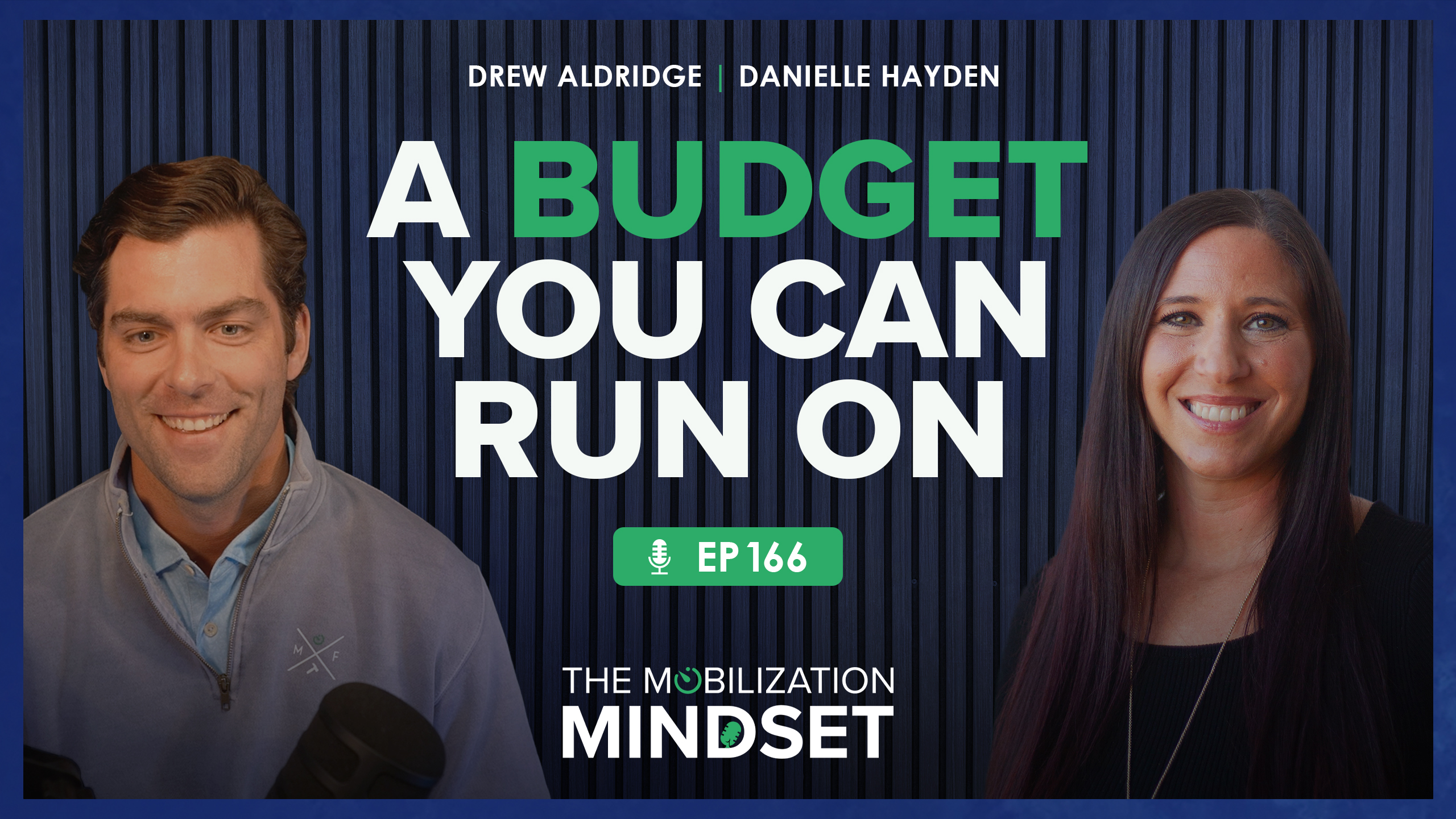
Profit doesn’t equal cash, and your CPA probably isn’t the right person to tell you what to do about it. Knowing your numbers is one thing. Knowing what to do with them is what helps you run a better business.
In this episode of The Mobilization Mindset, Drew Aldridge sits down with Danielle Hayden, CPA, CEO of Kickstart Accounting, and host of the CEO Numbers Network podcast, to discuss how business owners can build a stronger financial foundation and use their numbers to make better decisions.
They discuss:
• The different roles a bookkeeper, CPA, and CFO should play in your business
• When a fractional CFO makes sense, and when you might need one in-house
• How to turn your budget into a real decision-making tool instead of a document you rarely revisit
• Which financial KPIs to track, from revenue and gross margin to your top five operating expenses and cash trends
• Why profit and cash flow tell two very different stories, and where your cash hides on the balance sheet
Danielle also shares her take on QuickBooks, AI tools like ChatGPT, and why they can’t replace the CEO’s judgment or a clean set of books.

Some of the most powerful tools for improving cash flow don’t require borrowing more money. They start with your contract.
In this episode of The Mobilization Mindset, Scott Peper and Drew Aldridge break down how subcontractors can negotiate construction contracts with cash flow and risk in mind.
They discuss:
• How paid-if-paid and paid-when-paid terms can impact your cash flow
• Why subcontractors should understand the GC’s agreement with the owner
• How clearer payment and change order terms can prevent problems later
• Strategies for managing retainage as your business grows
• How the “Yes, If” method can create better outcomes during negotiations
If you’re a contractor looking to improve cash flow, reduce risk, and negotiate from a stronger position, this episode shows why some of your best opportunities may already be sitting inside your contract.

In this episode of The Mobilization Mindset, Scott Peper sits down with construction executive and author Victor Bretting to reflect on the lessons he’s learned throughout five decades in the industry. From managing cash flow and navigating contractor relationships to developing as a leader and building a legacy, Victor shares the experiences that shaped his approach to construction and life.
They discuss:
– Why perseverance is essential in construction
– How forecasting and understanding cash flow can protect a growing contracting business
– What subcontractors can do to build stronger relationships with general contractors
– Why great leadership requires listening, learning, and serving others
– The importance of legacy, mentorship, and talking openly about mental health
Victor also shares the story behind his memoir, The Man I Would Become, and how writing about his life forced him to reflect on his successes, mistakes, relationships, and the kind of legacy he wants to leave behind.
Victor’s Website: https://brettingtexanranch.com/about
The Man I Would Become: https://brettingtexanranch.com/the-book

Growing a business requires more than getting better at what you do. It requires becoming the leader your business needs next.
In this episode of The Mobilization Mindset, Scott Peper and Drew Aldridge explore the four stages of leadership: Operator, Founder, Manager, and Leader, and how business owners must learn to navigate each as their company grows.
They discuss:
– Why your business can only grow as far as you do as a leader
– The differences between being a founder, leader, manager, and operator
– Why leadership starts with learning to lead yourself
– How developing and empowering others creates room for growth
– Why letting go doesn’t mean others have to do things exactly your way
If you’re growing a business and finding that your role is changing along with it, this episode offers a practical look at how to evolve as a leader while building a team capable of growing with you.

In this episode of The Mobilization Mindset, Scott Peper and Drew Aldridge break down what core values should really look like inside a growing company. They share lessons from building Mobilization Funding’s own culture and explain how clearly defined values can guide decisions, create accountability, and give employees a standard for how to operate.
They discuss:
• Why every company has core values, whether they’re written down or not
• When core values become corporate fluff
• How leaders turn values into everyday behaviors
• Why core values can help employees make decisions independently
• How hiring and accountability change when everyone operates from the same standards
If you’re trying to build a stronger culture and give your team greater clarity as your business grows, this episode offers a practical look at making core values actually mean something.

The future of construction depends on more than projects—it depends on people.
In this episode of The Mobilization Mindset, Scott Peper sits down with Joel Thames, Vice President of Health, Safety, Environment & Workforce Development at Associated Builders and Contractors (ABC), to discuss America’s Workforce Academy—a groundbreaking partnership between ABC and Meta designed to recruit, train, and place the next generation of skilled construction professionals.
Together, they discuss:
– How America’s Workforce Academy is helping address the construction labor shortage
– Why recruiting, training, and placing workers must happen together—not separately
– How contractors of every size can strengthen their own workforce pipeline
– Why financial literacy and career development are essential to long-term retention
– How investing in people creates stronger businesses and a stronger industry
Joel also shares why workforce development isn’t just an industry initiative—it’s a competitive advantage. From reducing turnover and improving safety to creating long-term career opportunities, investing in people is one of the smartest investments a contractor can make.

Winning more bids isn’t about having the lowest price—it’s about giving the customer the most confidence.
In this episode of The Mobilization Mindset, Scott Peper and Drew Aldridge share practical strategies that help subcontractors win more work without sacrificing profitability.
They discuss:
– Why the best contractors don’t bid every project
– How to evaluate risk before submitting a proposal
– Why confidence and clarity matter more than simply being the lowest bidder
– How to position yourself as a trusted partner instead of just another subcontractor
– Why winning on value leads to stronger margins and better long-term relationships
If you’re looking to win more profitable work and build stronger relationships with general contractors, this episode offers practical strategies you can apply to your very next bid.